So, you’re thinking about starting a renovation…
So, you’re thinking about starting a renovation—exciting! But before the demo dust starts flying, it’s worth pausing to ask one important question: how do you avoid costly mistakes, unexpected delays, and unnecessary stress along the way? The good news is that with the right approach, renovating your home can be just as rewarding as the final reveal. Today, we’re pulling back the curtain to share some insider industry guidance so you can navigate your renovation with confidence—and actually enjoy the process.
One of the most common scenarios we see is clients coming to us after they’ve already hired a General Contractor. And honestly, we understand why. A renovation can’t move forward without a G.C., right? While that’s true, starting there can actually put you at a disadvantage. Think of your General Contractor as the driver of the car—but every driver needs a clear, well-planned route. Without a detailed design roadmap, even the most experienced contractor may end up taking detours that lead to potholes instead of smooth highways.
Here’s why that matters. When a G.C. prepares a bid, industry standard practice is to include the bare minimum scope of work along with “allowances” for materials like tile, fixtures, cabinetry, and finishes. These allowances are typically based on entry-level, contractor-grade items—functional, yes, but often lacking personality or design intention. As the project unfolds, upgrades and unforeseen conditions are handled through change orders, which are added to your invoices. This isn’t deceptive—it’s simply how the industry works—but it can easily lead to budgets creeping upward if decisions haven’t been made in advance.
This is where an interior designer who specializes in renovation planning becomes invaluable. A comprehensive design plan gives your contractor a clear, detailed roadmap before construction begins, allowing for more accurate bids, realistic timelines, and far fewer surprises. The design process starts with understanding your goals, lifestyle, and vision—often through inspiration images or mood boards. Thanks to platforms like Pinterest and Instagram, it’s easier than ever to visually communicate what you love, even when words fall short.
Once the vision and budget are aligned, your designer moves into the technical phase: creating to-scale floor plans, elevations, lighting layouts, and sourcing specific materials—from tile and countertops to flooring and paint colors. This phase takes time, typically four to six weeks, and revisions are a natural part of the process. But it’s time well invested. A finalized design plan outlines every detail, includes specific product information and retail pricing, and gives you control when it’s time to solicit bids from contractors.
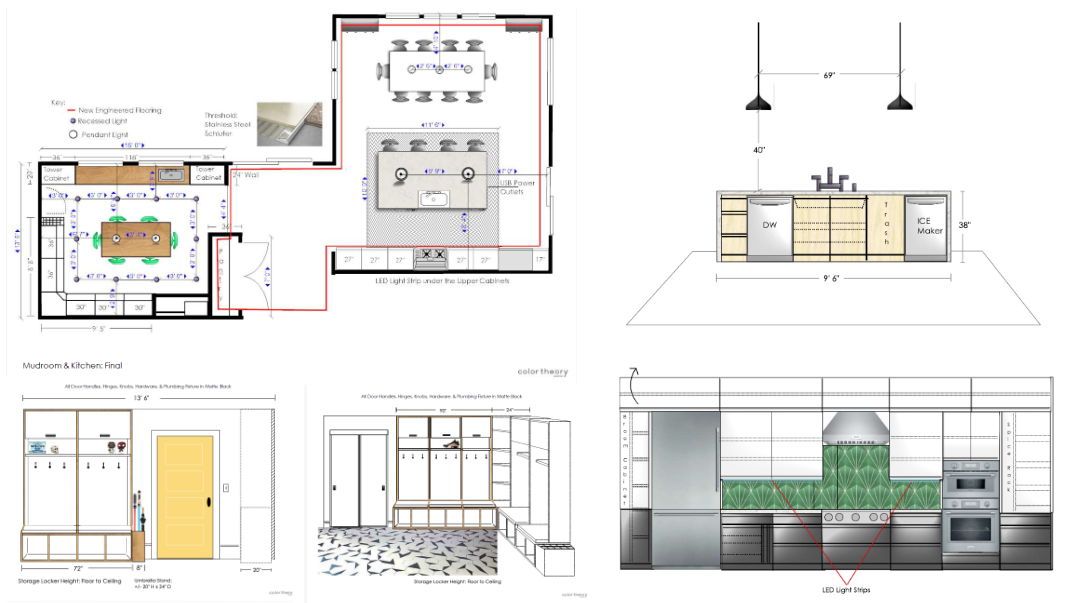
Milton, Ma.: Mudroom and Kitchen Renovation Design Plan
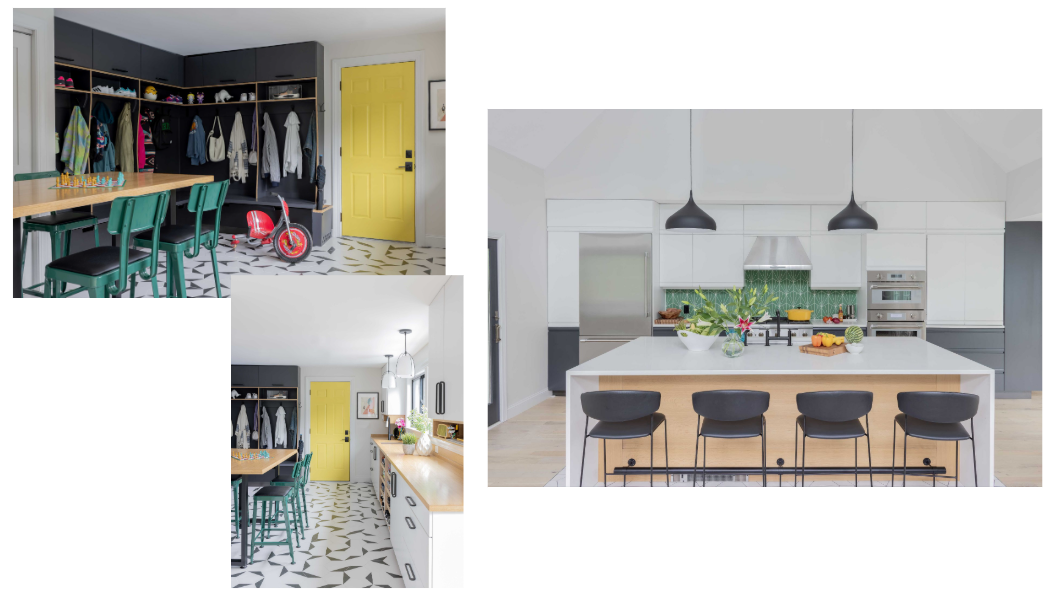
Milton, Ma.: The finished result of the Mudroom and Kitchen renovation, based on the finalized design plan.
Handing a General Contractor a complete, thoughtful design plan sends a clear message: you’re prepared, informed, and serious about your project. It also sets the stage for collaboration. A great contractor should welcome working alongside your designer, who is there to protect your vision and your investment. Any resistance to that collaboration is worth noting—it’s often a red flag. As designers, we also stay involved during construction, visiting the site to answer questions, review progress, and ensure the design is being executed as planned.
When it comes time to hire a G.C., we recommend interviewing at least three qualified candidates. Referrals from friends, neighbors, or colleagues are invaluable, and your designer can often suggest contractors well-suited to your project. Doing your own research through trusted platforms like Houzz, Yelp, or Google is also a smart move. Beyond experience and credentials, pay attention to rapport—this is someone who will be working in your home, your sanctuary, for weeks or even months.
Renovations are marathons, not sprints. Rushing decisions or cutting corners almost always leads to regret. Choose professionals whose communication style and personality align with yours. A good rule of thumb? If you feel like you could comfortably share a lunch conversation with them, you’re probably on the right track. The same goes for your designer.
Finally, if your project doesn’t require permits and you’re considering acting as your own General Contractor, proceed thoughtfully. Managing trades like electricians, plumbers, flooring specialist and painters requires a clear understanding of sequencing and project management. Missteps can easily result in delays and added costs. Whenever possible, avoid hourly-rate labor. Reason being, if you're being paid by the hour, then what is your financial incentive to complete your work as efficiently as possible? The more billing hours, the more one earns. And remember the golden rule of renovation: good work isn’t cheap, and cheap work isn’t good.
We hope this guide leaves you feeling informed, empowered, and optimistic about your upcoming renovation. With the right planning, the right team, and a clear vision, the process can be just as satisfying as the finished space.