color theory For Winter: How Soft Neutrals and Warm Light Create Hygge Interiors
As New Englanders, we know winter well. It’s long, dark, and—if we’re being honest—sometimes daunting. We miss the signs of life and the extra hours of sunlight that make our warmer seasons so sweet, fleeting as they are. Each year, we brace ourselves for the return of low light and frigid temperatures, holding onto the distant promise of 8 p.m. sunsets and afternoons spent basking in the sun like a happy housecat.
Rather than letting the gray world outside seep into our energy and day-to-day rhythm, winter offers an opportunity: a chance to lean into the coziness of home and time spent with family by embracing the Danish concept of hygge. Pronounced “hoo-gah,” hygge has been a design-world buzzword for the past decade, but it’s far more than an aesthetic—it’s a philosophy rooted in comfort, presence, and connection.
Like many words tied to a very specific feeling or atmosphere, hygge has no direct English translation, though “extreme coziness” comes close. Think of curling up on the sofa with a blanket, a good book, and a warming drink in your favorite mug. That feeling—that sense of ease and contentment—is what hygge is all about. While our schedules may not always allow for long stretches of leisure, hygge can be woven into everyday life, turning small routines into meaningful rituals and giving ordinary objects a thoughtful sense of purpose.
Though the principles of hygge extend well beyond the home, this is where we’ll focus—because home is the sacred space where your day begins and ends. Now, back to that snuggly blanket and steamy mug of comfort. The heart of hygge living lies in creating spaces you genuinely want to spend time in. This doesn’t require a major investment; it’s more about choosing pieces and moments that signal to your mind that it’s time to slow down, be present, and gently detach from the outside world—if only for a little while during an otherwise busy day.
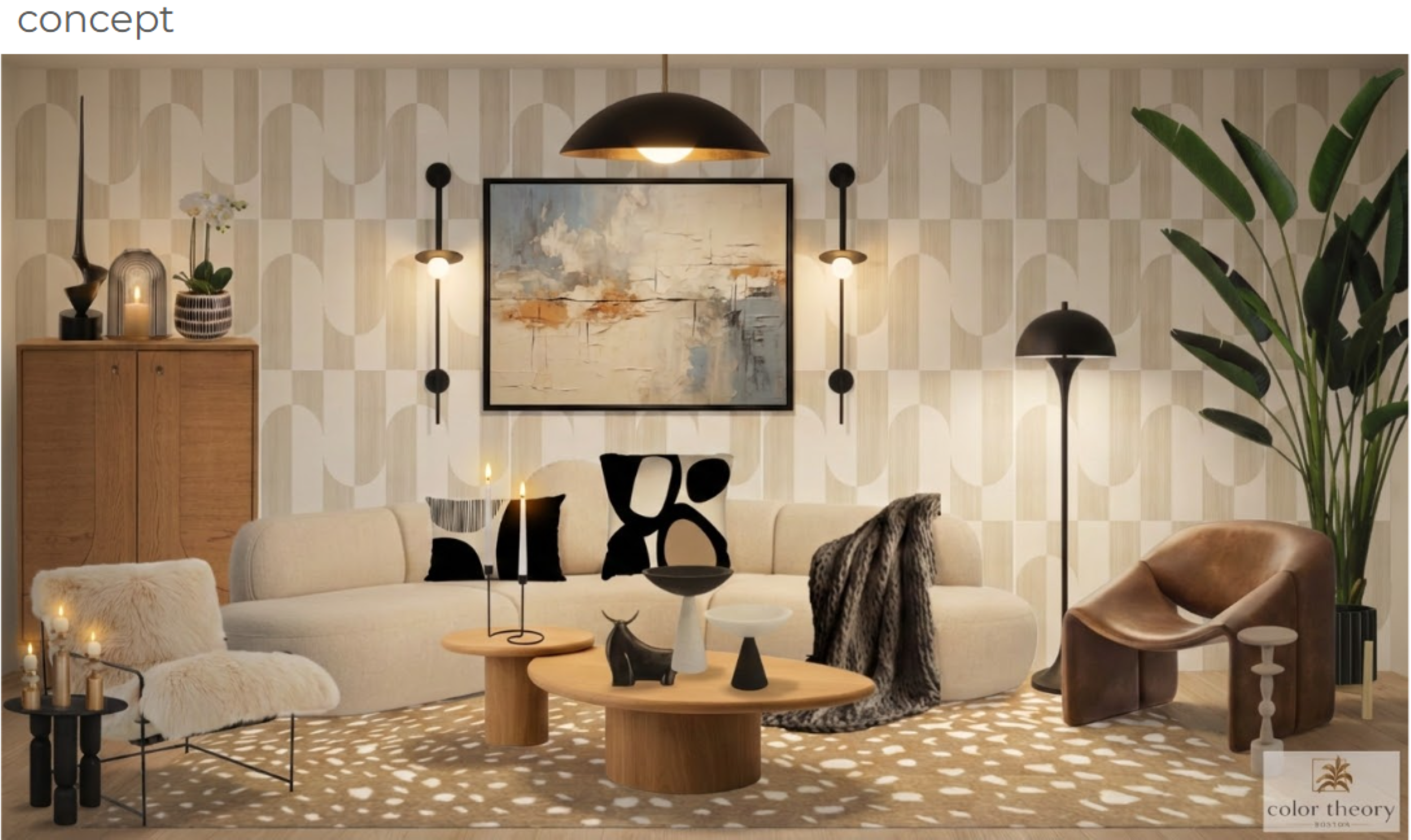
We were recently invited to create a hygge-inspired living space for longtime clients in their winter getaway home. Envisioned as the ultimate après-ski retreat for friends and family, the room was designed as a comforting enclave in soft, neutral tones—without sacrificing pattern, texture, or contrast. Plush, cloud-like upholstery, warm caramel hues in natural materials, soft geometric patterns without hard angles, and grounding touches of black all work together to create a space that feels lived-in and cozy, while still visually engaging. Hygge can be achieved in any home through small but meaningful choices that encourage slowing down and savoring quiet moments.
Create subtle, soft lightscapes.
Lighting is one of the most powerful elements in shaping how a space feels—and how your nervous system responds. It’s nearly impossible to truly relax under cool-toned overhead lighting, which can feel harsh and unforgiving. Whenever possible, we rely on ambient lighting as the primary source, using warm incandescent bulbs to create a golden, enveloping glow that feels cocoon-like. A layered mix of floor lamps, table lamps, candlelight—or a fireplace, if you have one—creates intimate pockets of light while maintaining a gentle, even warmth throughout the room. Recently, we’ve also discovered the magic of candle warmers: their halogen bulbs safely release fragrance without a flame, while casting a beautiful, cozy spotlight on the vessel itself.
Let texture lead the way.
Rather than leaning on bold colors or busy patterns, hygge spaces gain depth through layered textures. Smooth, linear wood grains paired with imperfect matte pottery; shaggy sheepskin draped over a simple wooden chair; accents of leather, cork, or woven baskets—all create subtle contrast that feels rich but never overwhelming. In this space, we combined ivory bouclé, shearling, sculptural leather, and fawn-print textiles to make every surface feel inviting and touchable. Even incorporating just a few of these elements—through pillows, throws, or a comfy reading chair—can transform a room into a place of rest and reconnection.
Bring the outside in.
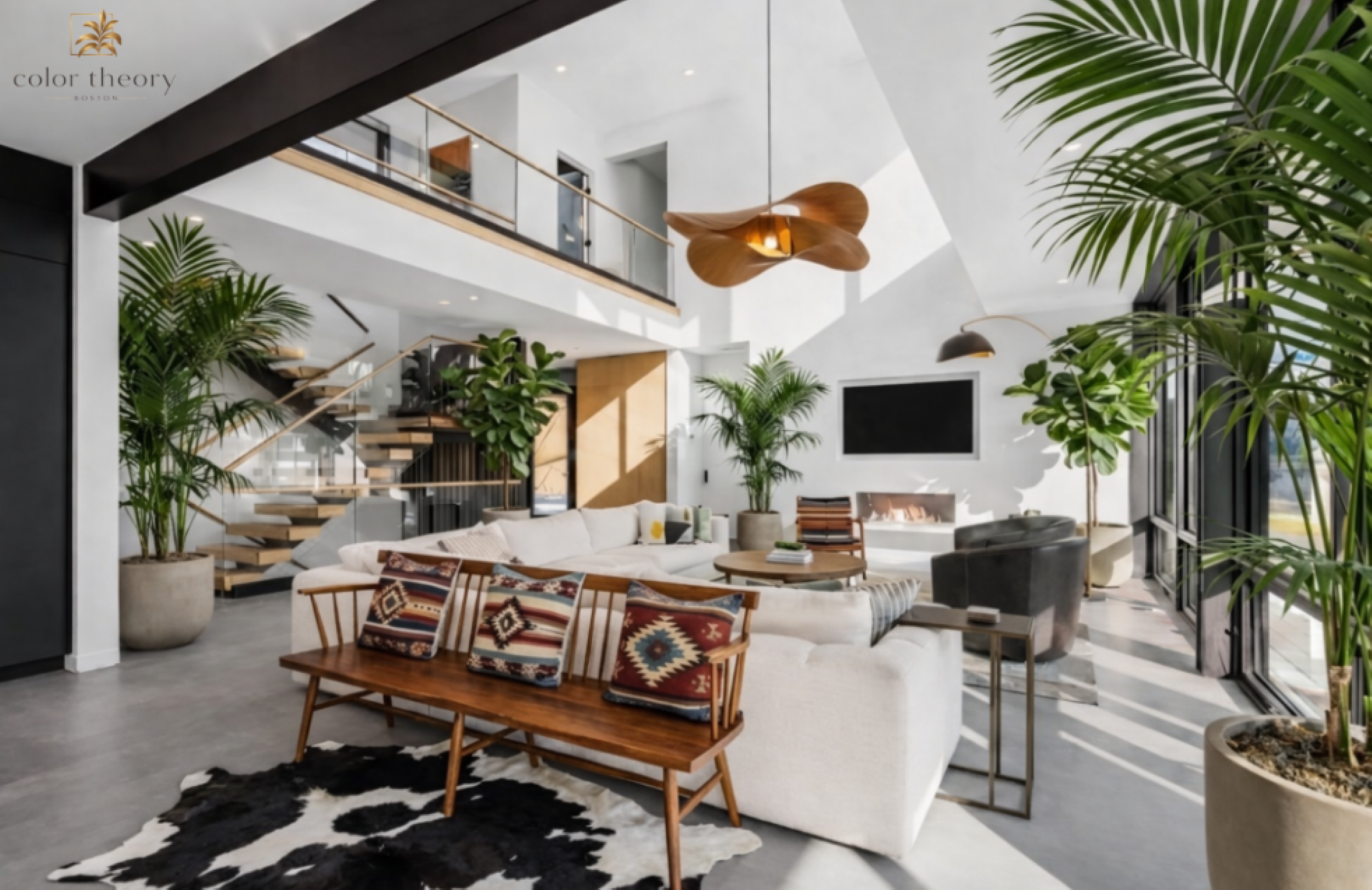
Designed through the lens of hygge, our Vermont retreat balances modern architecture with warmth and ease, proving that true luxury is found in comfort, calm, and spaces that welcome you in.
Natural elements make a space feel warmer and more alive, and living plants play a key role in hygge interiors. Beyond symbolizing growth, life, and the changing seasons, plants help purify the air—especially important during colder months when we spend more time indoors. Caring for them becomes a small but grounding ritual, offering moments of calm and mindfulness throughout the day. Hardy options like snake plants, spider plants, pothos, and fresh herbs are not only easy to maintain, but they interact beautifully with light, filtering it softly and casting gentle, shifting shadows.
Don’t Forget to Embrace imperfection.
At its core, hygge isn’t about how your home looks—it’s about how it feels. Instagram-ready isn’t a requirement. Display objects that carry personal meaning, play music that evokes comfort and happiness, and resist the urge to over-style. A hygge home feels lived in, loved, and authentic—and that’s where its true warmth comes from.
PBS recently produced a timely and insightful segment, “What the Scandinavian concept of hygge can teach Americans about comfort and happiness.” Its message feels especially poignant right now, reminding us that true comfort is less about excess and more about intentional warmth, simplicity, and human connection.